


Climate Adaptation and Resilience in the Built Environment
As climate risks increase, resilient buildings and neighbourhoods are critical to protecting people, places, and infrastructure.
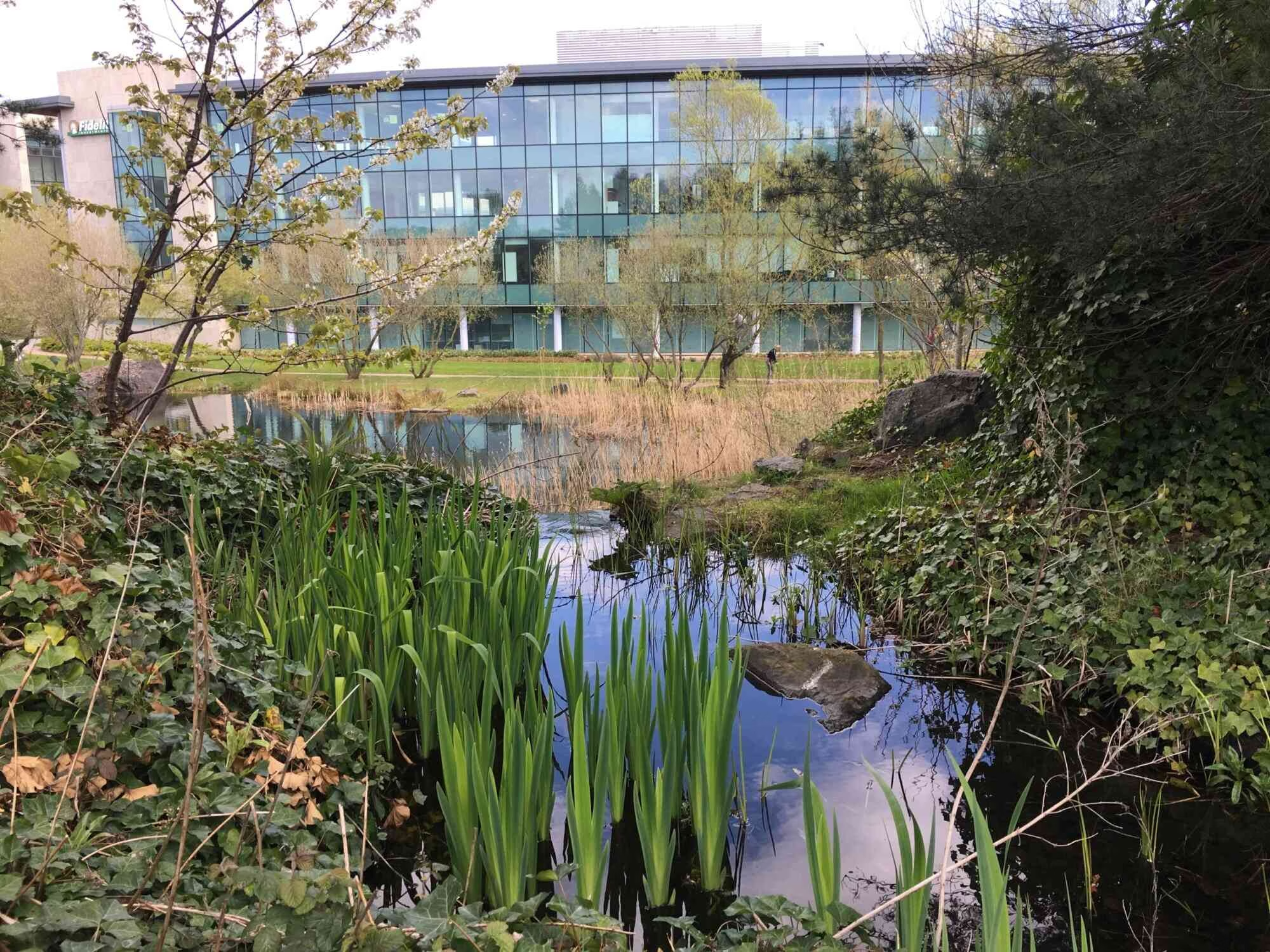 Water Retention Pond at Citywest Business Campus in Dublin (Fran Igoe)
Ireland’s buildings must be ready for a changing climate
Ireland is already experiencing the tangible impacts of climate change, warmer average temperatures, heavier rainfall, rising sea levels, and more frequent coastal and river flooding. These changes pose significant risks to our built environment: homes, workplaces, public buildings, and historic structures. Adapting Ireland’s buildings and neighbourhoods to withstand these pressures is one of the defining challenges of our generation.
Risks to the built environment
Flooding
Flooding is among the most significant and immediate threats. More frequent and intense rainfall events, combined with rising sea levels, are increasing the risk of both river and coastal flooding across Ireland. Buildings that were designed for the climate of the past may be poorly equipped for the conditions ahead.
Overheating
Overheating is a growing concern as average temperatures rise and heatwaves become more common. Buildings that lack adequate ventilation, shading or thermal mass can trap heat, creating serious health risks – particularly for elderly people, young children, and those with chronic illness.
Damage to the historic built environment
Damage to the historic built environment presents a particular challenge. Many of Ireland’s older and protected structures were built without the capacity to withstand today’s climatic conditions, let alone tomorrow’s. Balancing conservation with adaptation requires careful, specialist approaches.
Building resilience: key approaches
Retrofitting for resilience – Upgrading Ireland’s older building stock is essential not only for energy efficiency, but for climate resilience. Well-designed retrofit integrates flood-resilient construction, improved ventilation and overheating mitigation alongside thermal upgrades — ensuring that buildings are fit for the future in every sense.
Sustainable Urban Drainage Systems (SuDS) – SuDS reduce runoff and the risk of flooding by allowing water to be absorbed, stored or slowly released. They are increasingly embedded in planning requirements for new development, and have an important role to play in retrofitting existing urban areas.
Nature-based solutions – Green roofs, living walls, street trees, urban greening and permeable paving are powerful tools for managing both flood risk and urban heat. By working with natural systems rather than against them, these approaches improve climate resilience while also delivering benefits for biodiversity, air quality and human wellbeing.
Adaptive design – New buildings and major renovation projects have an opportunity, and increasingly a responsibility, to be designed with future climate conditions in mind. This means thinking beyond current regulations to anticipate the conditions buildings will face over their full lifespan.
The policy landscape
Ireland’s approach to climate adaptation in the built environment is shaped by three interconnected policy frameworks.
The National Climate Change Risk Assessment (NCCRA) identifies the key risks that climate change poses to Ireland — including to buildings, infrastructure, and the communities that depend on them. It provides the evidence base for understanding where our vulnerabilities lie and where action is most urgently needed.
The National Adaptation Framework (NAF) establishes the overarching policy framework for responding to those risks, setting out how Ireland will adapt across sectors, including the built environment. It guides how government, local authorities, and industry should plan and act.
The Climate Action Plan translates these frameworks into specific, time-bound actions — both to reduce Ireland’s emissions and to enhance the resilience of our buildings and infrastructure against the climate impacts already underway.
IGBC’s work in this field

The IGBC supports its members and the wider industry in understanding and responding to climate adaptation challenges. We advocate for building regulations, planning policy and retrofit programmes that integrate resilience alongside energy efficiency — and we work to ensure that nature-based solutions and adaptive design approaches are embedded in how Ireland builds and upgrades its built environment.
Climate adaptation is not a separate agenda from sustainability – it is central to it. Buildings that are truly sustainable must be resilient to the climate we have now, and the climate we will have in the decades ahead.

Guide
Related content
-

Circularity & Resource Efficiency in the Built Environment
Designing buildings for longevity, adaptability, and reuse is key to creating a resource-efficient and circular built environment. -

Carbon Emissions & Net Zero in the Built Environment
The built environment has a critical role to play in addressing climate change by reducing both operational and embodied carbon emissions. -

Health & Wellbeing in the Built Environment
Sustainable buildings are not only good for the planet, they are essential for healthier, fairer, and more resilient communities. -

Nature & Biodiversity in the Built Environment
Nature is in crisis, but the built environment has the potential to be part of the solution through planning and design that protects, restores, and enhances biodiversity. -

Life Cycle GWP Assessment – Methods and Resources
Overview The Irish Green Building Council (IGBC), as part of the INDICATE initiative, has developed a prototype Life Cycle Global Warming Potential (GWP) Assessment Methodology for Ireland. This methodology has […] -
Life Cycle Assessment tools and other useful links
There are many Life Cycle Assessment tools for performing building LCA. Here’s a list of LCA tools and useful links. Carbon Designer for Ireland (No Longer Available) One Click LCA […]