
Circularity & Resource Efficiency in the Built Environment
Designing buildings for longevity, adaptability, and reuse is key to creating a resource-efficient and circular built environment.
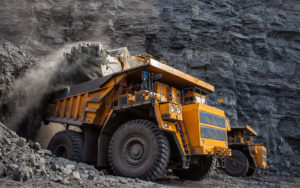
The construction industry is responsible for over 50% of all waste in Ireland. Very little of this waste is reused – it’s mostly downcycled as aggregate or backfill.
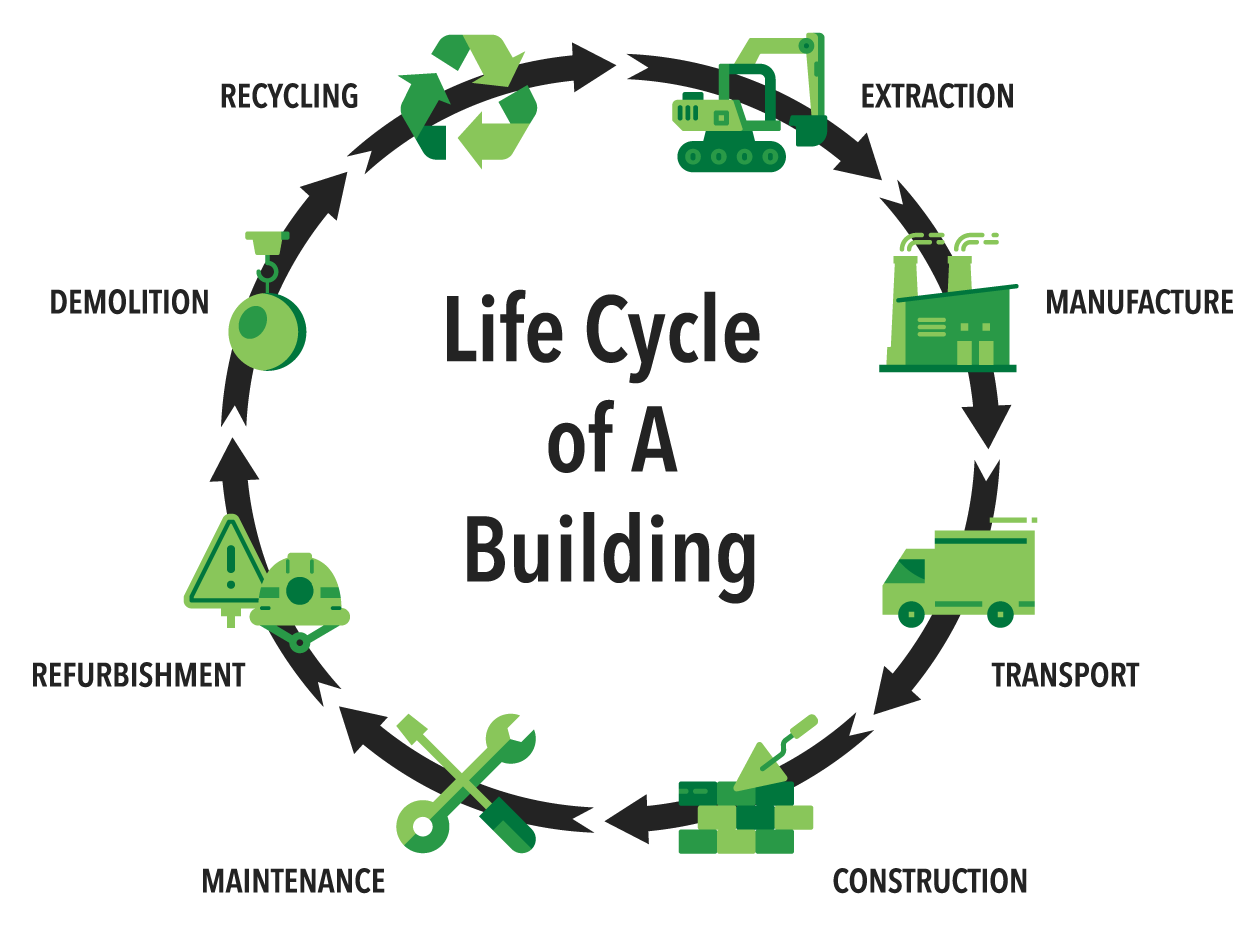
Circular Economy in construction focuses on maximising resource efficiency and minimising waste throughout a building’s lifecycle, from design and construction to operation and deconstruction. Unlike the traditional “take, use, dispose” model, circular construction ensures that materials, products, and spaces are designed for longevity, adaptability, and reuse.
Embedding circular principles into the built environment can reduce environmental impact, extend the value of materials, and create buildings that are not only resource-efficient but also resilient and future-proof.
Research from McKinsey and the World Economic Forum estimates that applying the circular economy to the built environment could reduce emissions at scale by 3.4 to 4.0 gigatonnes of carbon dioxide by 2050, representing roughly 75% of the built environment’s embodied carbon.
Building a Circular Ireland
In 2025 the IGBC published our Building A Circular Ireland roadmap, which uses the well-established ‘Waste Hierarchy’ approach to circularity, and includes the following core targets for 2040:
Value our existing building stock:
- 50% – 75% reduction in underuse/ vacancy in the building stock achieved
Plan for resource efficiency:
• Optimised infrastructure-to-development ratios achieved through good planning
• All communities have access to a full range of affordable life-stage-appropriate housing, ensuring better use of the housing stock
Design for circularity:
• 100% of new buildings have adopted Design for Adaptability / Deconstruction approaches
• Improved resource efficiency by 40-50% over baseline
• Optimised use of regenerative & biobased materials within viable capacity. Close the materials loop
Close the Material Loop:
• 100% of materials from deconstruction reused/recycled.
• 100% of materials from, or can enter, non-toxic closed loop supply chains
• Optimised use of regenerative & biobased materials within viable capacity
Change the business model:
• All construction materials are within Extended Producer Responsibility (EPR) schemes
• Product-as-a-Service widely used
Enable the circular transition:
• Changes in the planning, regulatory and certification system start to facilitate greater integration of circularity
• Procurement processes starting to be a driver of circular innovation systems
• All in the construction industry have already started upskilling in circular solutions
• Government and industry have started to invest in the transition to circularity
• Digital solutions starting to enable traceability of components and materials, facilitating adaptation, repair, deconstruction and reuse
IGBC’s work in this field
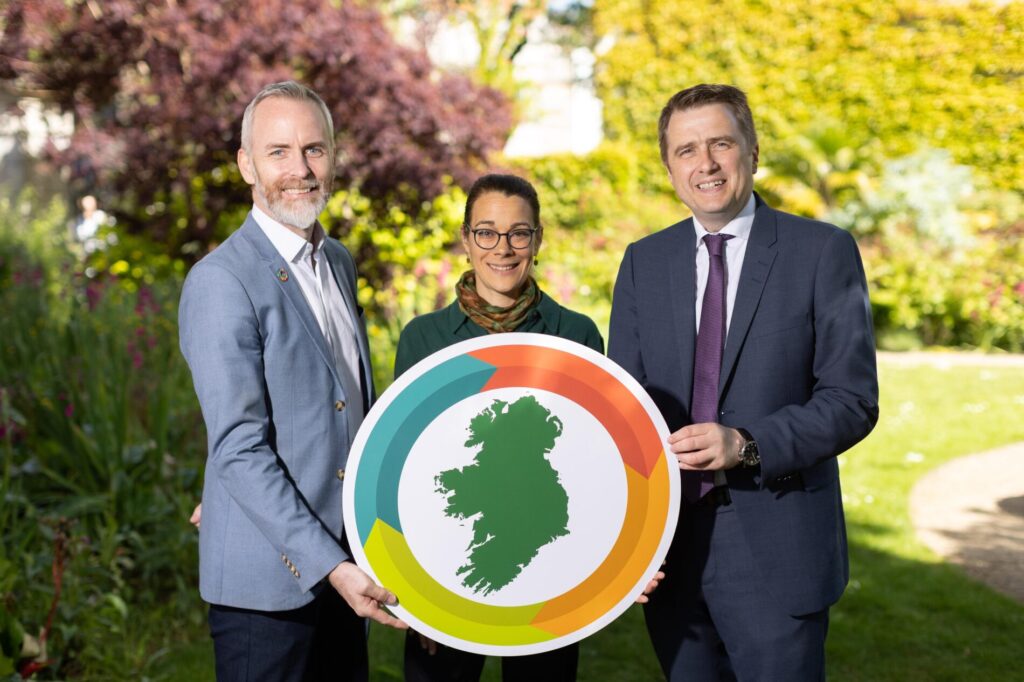
Circularity & resource efficiency are one of the key priorities for the Irish Green Building Council. We provide resources to help the construction and property industries embed circularity in their processes and projects.
We have a circularity newsletter issued quarterly to all members interested in this topic, a training course and many other publications you can find below, including our “Building a Circular Ireland” Roadmap.
Guides
-
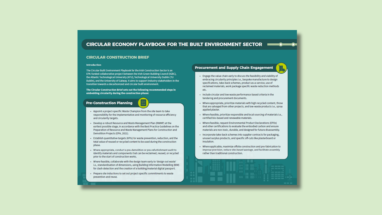
Circular Economy Playbook For The Built Environment Sector | Circular Construction Brief
Support industry stakeholders in the transition towards a decarbonised and circular built environment -
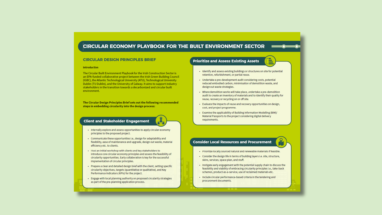
Circular Economy Playbook For the Built Environment | Circular Design Principles Brief
Support the industry stakeholders in the transition towards a decarbonised and circular built environment environment. -
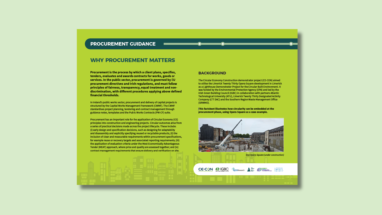
Procurement Guidance
This factsheet illustrates how circularity can be embedded at the procurement phase. -
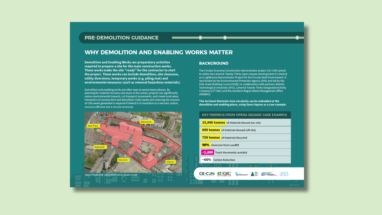
Pre-Demolition Guidance
How circularity can be embedded at the demolition and enabling phase, using Opera Square as a case example
Projects
-
-
Transition to a Circular Economy
Provide a Transition to Circular Economy Template and a Best Practice Guidance Document to assist builders in adopting circular practices within the Irish construction sector. -
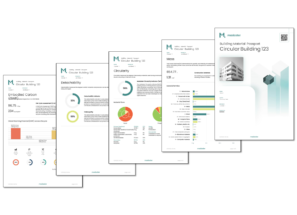
Material Passports
Pioneering and promoting the Material Passport technology in the Irish Construction Sector -
-
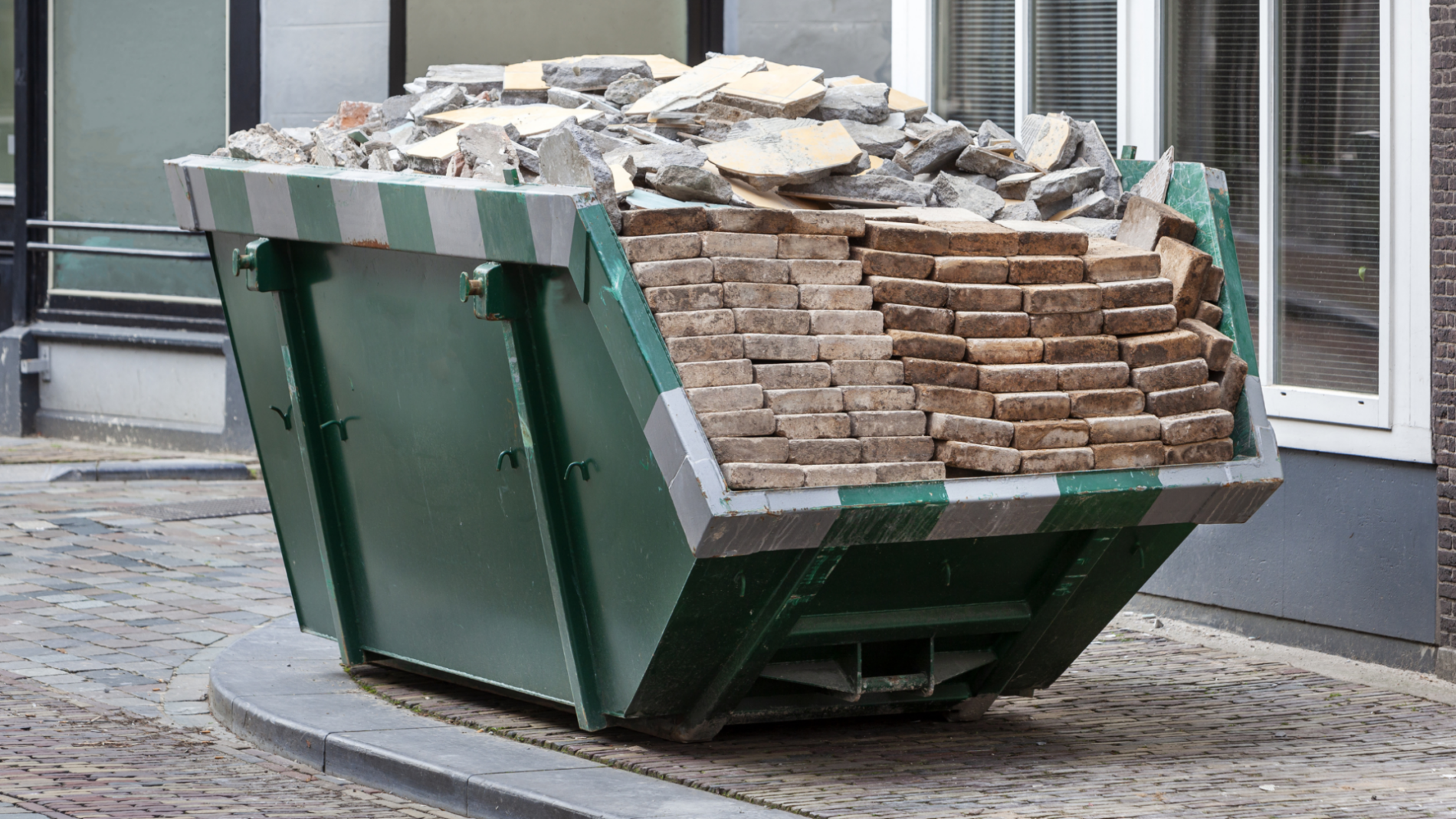
Construction Materials Exchange
A digital platform to unlock the potential of excess construction materials.
Guide
Related content
-
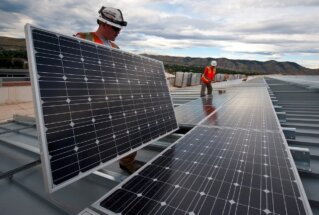
Carbon Emissions & Net Zero in the Built Environment
The built environment has a critical role to play in addressing climate change by reducing both operational and embodied carbon emissions. -
Climate Adaptation and Resilience in the Built Environment
As climate risks increase, resilient buildings and neighbourhoods are critical to protecting people, places, and infrastructure. -

Health & Wellbeing in the Built Environment
Sustainable buildings are not only good for the planet, they are essential for healthier, fairer, and more resilient communities. -
Nature & Biodiversity in the Built Environment
Nature is in crisis, but the built environment has the potential to be part of the solution through planning and design that protects, restores, and enhances biodiversity. -

Life Cycle GWP Assessment – Methods and Resources
Overview The Irish Green Building Council (IGBC), as part of the INDICATE initiative, has developed a prototype Life Cycle Global Warming Potential (GWP) Assessment Methodology for Ireland. This methodology has […] -
Life Cycle Assessment tools and other useful links
There are many Life Cycle Assessment tools for performing building LCA. Here’s a list of LCA tools and useful links. Carbon Designer for Ireland (No Longer Available) One Click LCA […]