


How Compact Urban Growth Can Cut Carbon Emissions in Ireland
As cities and towns in Ireland and around the world continue to grow, the push for more sustainable...

About the author

As cities and towns in Ireland and around the world continue to grow, the push for more sustainable urban development has become increasingly urgent. Urban areas are responsible for a large share of carbon emissions, largely due to energy use, sprawling infrastructure, and transportation needs. One innovative and promising solution is the compact city model, a planning approach that encourages higher-density housing, efficient public transport systems, and better access to everyday services and amenities.
What Is Compact Urban Growth?
Compact urban growth (CUG) aims to create more efficient cities by concentrating development in a smaller area. This reduces the need for long commutes, lowers energy demand, and supports more sustainable land use. It’s a strategy that offers both environmental and social benefits, including lower greenhouse gas (GHG) emissions, improved public health, and enhanced quality of life.
Introducing RE-CUGI: Researching Low-Carbon Urban Development in Ireland
To better understand how compact urban development can reduce emissions, the RE-CUGI project (Reduced Emissions through Compact Urban Growth in Ireland) was launched, funded by the Sustainable Energy Authority of Ireland (SEAI). The project provides valuable insights into how urban planning decisions affect carbon emissions, using detailed life cycle assessment (LCA) techniques.
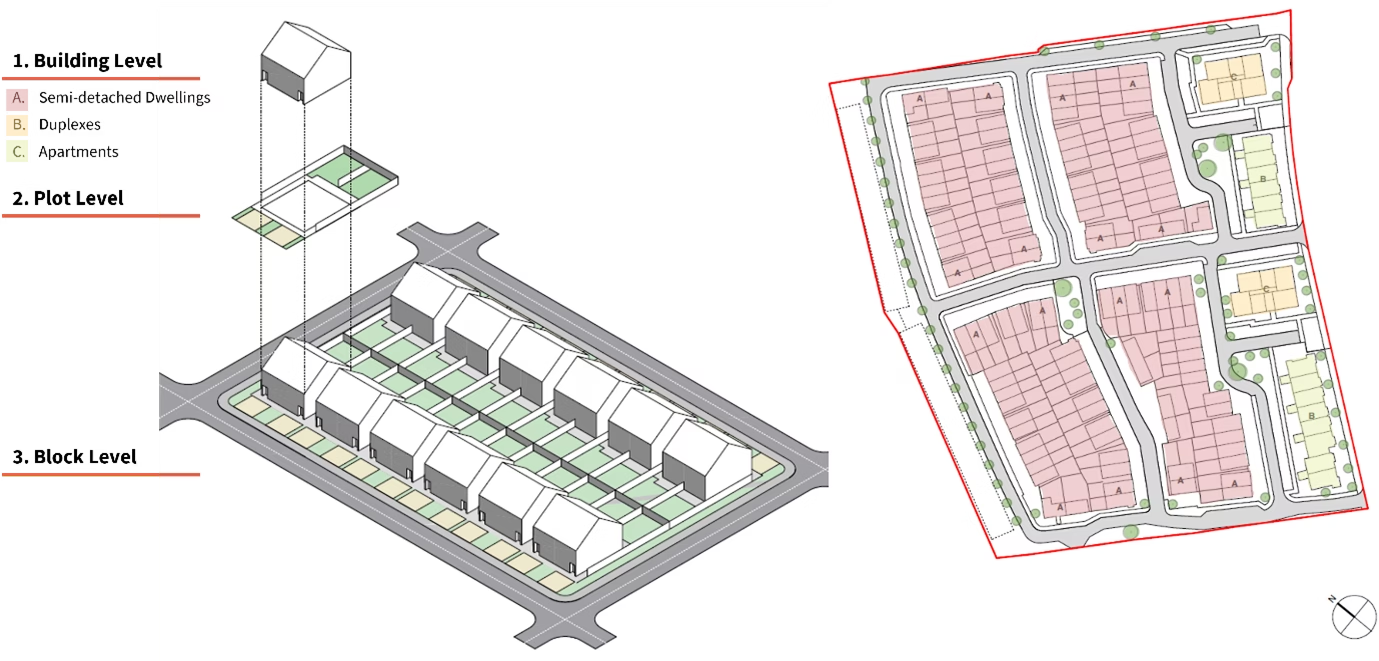
The study focused on real-world case studies of compact developments in Ireland, assessing not just the buildings themselves, but also external spaces and supporting infrastructure. The project applied the EU Level(s) framework for sustainable buildings, as well as carbon accounting methods developed by the Royal Institution of Chartered Surveyors (RICS).
Key Findings: Where Carbon Emissions Come From
One of the standout findings from the RE-CUGI research is the significant carbon footprint of external areas — such as roads, footpaths, and green spaces — in residential developments. These elements are often overlooked in traditional carbon accounting but have a major impact on total emissions.
Here’s what the data showed:
- In low-rise semi-detached housing, external areas contribute 32% of total GHG emissions.
- For duplexes, this figure drops to 19%.
- In apartment buildings, external spaces account for just 12% of emissions
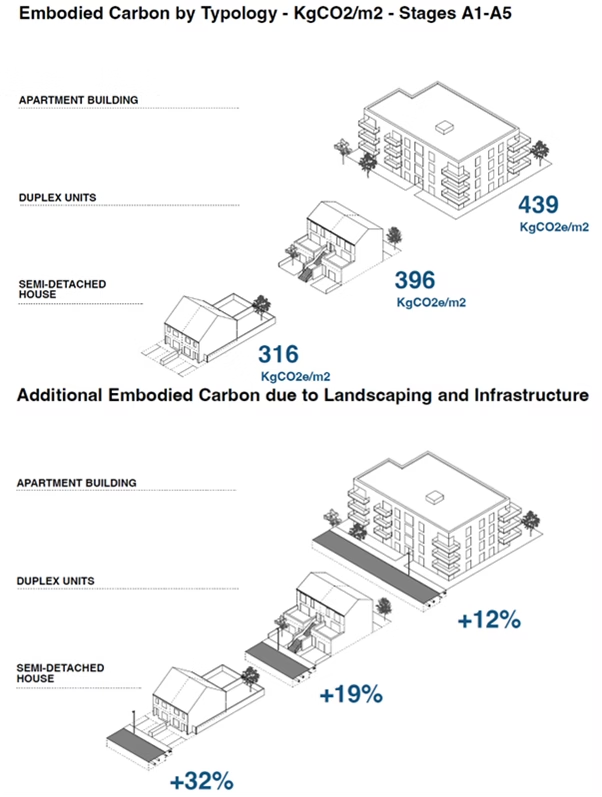
The primary culprits? Materials like concrete and asphalt are used in circulation spaces (roads, paths, driveways), which are highly carbon-intensive. This highlights a crucial opportunity: by reducing land take and infrastructure sprawl, compact development can significantly cut embodied carbon.

Tools for Planners and Policymakers
To help translate this research into action, RE-CUGI developed two practical tools to support sustainable urban planning and low-carbon development:
Traffic Light Tool (TLT)
A simple, user-friendly decision-support tool that assesses development projects based on compact and low-carbon principles. It helps planners quickly identify strengths and weaknesses in a project’s sustainability performance.
PLACE Tool
A resource for the early planning stages, the PLACE Tool evaluates the liveability and carbon impacts of development proposals. It encourages the integration of sustainability from the outset, making it easier to design communities that are both vibrant and low-carbon. The tool will be released soon.
Read more about RE-CUGI initiative here


News
More news from IGBC
-

Vacant to Vibrant Building Alliance Calls for Greater Investment in Regeneration and Adaptive Reuse to Deliver Homes and Revitalise Communities
The Vacant to Vibrant Building Alliance (VVBA) is calling on Government to prioritise ambitious regeneration and adaptive reuse... -

National Approach to Biodiversity Needed to Unlock Faster, More Certain Development
A cross-sectoral group of organisations representing developers, planners, building designers, social housing providers, and ecological experts has published a joint... -

Sustainable Urban Planning: Seven Recommendations for National Spatial Policy
Over the course of this series, we have examined how Ireland’s spatial planning system seeks to shape the... -

Sustainable Urban Planning: Compact Growth Benchmarks
This post reviews the final National Policy Objectives (NPOs) on future development in Ireland. -

IGBChats #20: DGNB Independent Review: A First for EU Taxonomy in Ireland
How one Irish project is testing alignment beyond self- assessment -

Comparing ISO 14001 and the CO2 Performance Ladder
Discover the key differences and connections between ISO 14001 and the CO₂ Performance Ladder.