


Protecting and enhancing biodiversity in the built environment is one of the Irish Green Building Council’s core priorities. Since 2022, we have been running webinars and training for building professionals on this topic, alongside a multi-disciplinary community of practice that meets quarterly to share challenges and learn from one another. This work has been complemented by a number of research projects, including the development of Irish case studies on the protection and enhancement of biodiversity in the built environment, and a report, developed in partnership with Trinity College Dublin, setting out the key actions needed to make the protection and enhancement of biodiversity the new norm in residential developments across Ireland.
A Seat at the Table
We were glad to be invited by the Independent Advisory Committee on Nature Restoration to take part in a series of workshops, together with several of our members, to help inform their recommendations on the draft of Ireland’s Nature Restoration Plan. This allowed us to bring the expertise and voice of the construction and built environment sector directly into the process.
Their report was released, and the first public consultation on Ireland’s draft National Nature Restoration Plan opened at the beginning of June and will close tomorrow.
We have now submitted our formal recommendations and comments. Our submission draws on years of stakeholder engagement with building professionals, ecologists, and other experts working across both the private and public sectors of building and renovation. It is also informed by our recent Bio-Neighbour project report, which sets out 18 actions for the government to help scale up nature in new buildings.
What We Recommended
The IGBC welcomes the consultation on Ireland’s draft National Nature Restoration Plan. Investors, policymakers, and a growing body of regulation, including the Nature Restoration Law, the Energy Performance of Buildings Directive (EPBD), the EU Taxonomy for Sustainable Finance, and the upcoming EU Climate Resilience Framework, are all driving a shift towards better protection and enhancement of biodiversity in the built environment, including greater use of green-blue infrastructure (GBI).
Despite this growing momentum, implementation on the ground remains inconsistent and fragmented. This poses risks to the timely consenting and delivery of housing and infrastructure, to the protection of nature itself, and to the many co-benefits that come with it. It is genuinely difficult to comment in detail on the current draft, given the lack of clarity on how Article 8 (urban ecosystems) will be implemented or how the proposed actions will be funded. We are encouraging the Department to use this opportunity to provide the industry with clarity and certainty, and to invest in the infrastructure needed to protect and enhance biodiversity in the built environment while still delivering the homes and infrastructure the country needs. With approximately 50,000 new homes required every year through 2040, along with the infrastructure to support them, the need for decisive action is immediate.
Our key recommendations are to:
- Develop and implement a coordinated national framework on biodiversity and planning in the built environment, through a dedicated National Planning Statement (NPS)
- Adopt a common, national standardised measurement tool for biodiversity
- Provide standardised toolkits, guidance documents, and templates to inform master planning and site layouts
- Invest in knowledge transfer and skills training across the sector
- Resource Local Authorities and support knowledge transfer at local level
- Ensure the plan supports overall restoration targets under Article 4
The Cost
In our submission, we set this out in more detail, and we show that this need not come at high cost to the State, since many of the solutions already exist; they simply need to be adopted and applied consistently. For example, developing a simple, proportionate measurement tool for sites zoned for development, as suggested above, is estimated by IGBC to require an investment of just €1,500,000, while developing the missing practical, standardised toolkits, guidance documents, and templates to inform master planning and site layouts is estimated at €1,250,000.
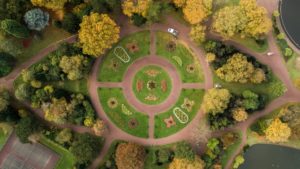
Picture: DHLGH building Wexford with NbS retention basin (F.Igoe)