


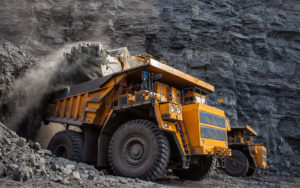

Comparing ISO 14001 and the CO2 Performance Ladder
Discover the key differences and connections between ISO 14001 and the CO₂ Performance Ladder.
 credits: Ronnakorn Triraganon
About the author

In this article, we will explore the relationship between two widely recognised frameworks that help organisations improve their environmental performance: ISO 14001 and the CO2 Performance Ladder. While both aim to reduce environmental impact and support sustainability goals, they differ in scope, methodology, and practical application. Understanding these differences is essential for organisations looking to implement an effective environmental or carbon management strategy.
This article outlines the scope of each framework, highlights their key similarities and differences, and explains how they can complement each other to drive meaningful environmental improvement.
What is ISO 14001?
ISO 14001 is an internationally recognised standard for establishing, implementing, and continuously improving an environmental management system (EMS). An EMS provides a structured framework for managing all environmental aspects of an organisation’s activities. This includes topics such as energy and resource use, waste generation, emissions, and compliance with environmental regulations. It operates according to the Plan-Do-Check-Act cycle, ensuring that organisations continually monitor, review, and improve their environmental performance.
A key feature of ISO 14001 is its broad scope. It is particularly valuable for organisations operating internationally or participating in global supply chains. By implementing ISO 14001, organisations can improve environmental performance, strengthen compliance, reduce risks, and build trust with stakeholders, while also enhancing operational efficiency.
What is the CO2 Performance Ladder?
The CO2 Performance Ladder is a management system designed to help organisations measure, reduce, and manage CO2 emissions and improve energy efficiency. It is a third-party verified certification scheme, which serves as both a carbon &energy management system and a low-carbon public procurement tool.
As a carbon & energy management system, the CO2 Performance Ladder guides organisations to measure emissions, set reduction targets, and implement strategies across operations and supply chains.
As a low-carbon public procurement tool, it can be used to provide an award advantage in public tenders to certified organisations, which have committed to structural carbon reduction within their operations and supply chains.
The Ladder is the standard GPP tool in the Netherlands and Belgium and is being rolled out in various additional European countries, including Ireland, the UK, France, and Portugal.
What are the main similarities between ISO 14001 and the CO2 Performance Ladder?
The two frameworks share a strong common foundation in structured management and continuous improvement. Both frameworks are management systems built on the Plan, Do, Check, Act cycle, requiring organisations to define policies and objectives, implement actions, monitor performance, and make ongoing improvements.
Both systems rely on a data-driven approach. Organisations must measure their performance, set targets, and demonstrate progress over time. This ensures that improvements are not only planned, but also verifiable and transparent.
Another important similarity is their compatibility and potential to be integrated with other systems. As a carbon management system, many of the requirements of the CO2 Performance Ladder, such as monitoring and reporting, align closely with those of ISO 14001. As a result, organisations can easily integrate the Ladder into an existing ISO 14001 system, or vice versa. This reduces the duplication of effort and creates a more cohesive management approach.
Both frameworks are also internationally recognised. ISO 14001 is recognised across global markets as a general environmental management standard, while the CO2 Performance Ladder is recognised as a GPP best practice by the IPCC, OECD, and WEF.
Finally, both frameworks are sector-neutral, meaning that they can be applied to organisations of all sizes and across all industries.
What are the main differences?
The most significant difference between ISO 14001 and the CO2 Performance Ladder lies in their scope. ISO 14001 takes a broad approach, addressing all environmental aspects of an organisation’s activities, from waste and water use to pollution and biodiversity. In contrast, the CO2 Performance Ladder has a narrower focus, concentrating specifically on CO2 emissions and energy use.
There are also notable differences in structure. ISO 14001 is a single-level certification standard, meaning that organisations either meet the requirements or they do not. The CO2 Performance Ladder, on the other hand, is a multi-level system, enabling organisations to gradually improve and demonstrate increasing ambition over time.
Another key distinction lies in the nature of their global reach. ISO 14001 is a universal standard – any organisation, anywhere, can pursue certification through an accredited body, regardless of local regulation. The CO2 Performance Ladder, by contrast, gains ground through formal adoption as a procurement tool. The Ladder is already the standard GPP tool in the Netherlands and Belgium, and is being rolled out as such in a growing number of other European countries, including Ireland, the UK, France and Portugal. Moreover, the CO2 Performance Ladder has a more specific role in procurement. While ISO 14001 may be used in tenders as a general qualification criterion, the CO2 Performance Ladder is explicitly designed to be embedded into tender procedures and applied throughout project delivery.
In terms of implementation, ISO 14001 typically requires a broad organisational effort due to its comprehensive scope, often involving extensive documentation, system development, and cultural change. The CO2 Performance Ladder, while narrower in scope, in some cases requires more detailed emissions measurement and reporting, which can make it more straightforward. The Ladder can also be resource-intensive, depending on the organisation’s starting point.
Summary at a Glance
| Criteria | ISO 14001 | CO2 Performance Ladder |
| Scope | Comprehensive environmental management system covering all environmental aspects, globally recognised | CO2 & energy management system, based in Europe |
| Structure | Single-level certification | Multi-level certification |
| Procurement | Selection or eligibility criteria | Direct incentivisation through award advantage |
| Validation | Certification by an independent auditor is not a requirement. Self-assessment or third-party assessment is possible | Third party validation conducted by accredited certifying bodies |
| Cost Summary | Internal resources, possible auditing costs | Scheme contribution (variable based on turnover), internal resources, and auditing costs |
Conclusion
ISO 14001 and the CO2 Performance Ladder are best understood not as competing systems, but as complementary tools that serve different purposes within an organisation’s sustainability strategy. ISO 14001 provides a broad, internationally recognised framework for managing environmental impacts across the board. In contrast, the CO2 Performance Ladder offers a focused approach to carbon reduction, combined with award advantages in procurement.
For many organisations, combining both frameworks is an effective approach. Having the foundation of ISO 14001 can ensure an easier path to certification on the CO2 Performance Ladder. Together, these systems enable organisations to move beyond compliance and demonstrate meaningful action on sustainability, supporting both operational improvement and long-term climate goals.
News
More news from IGBC
-

World Green Building Week 2026
World Green Building Week returns this September with an exciting programme of events across Ireland. -
IGBC Brings the Sustainable Built Environment’s Voice to Ireland’s Draft Nature Restoration Plan
Protecting and enhancing biodiversity in the built environment is one of the Irish Green Building Council’s core priorities.... -
2026 Mid-Year EPD Update
The first half of 2026 has been another significant period for EPD Ireland, with a wide range of... -
From Measurement to Action: How the CIF Carbon Calculator and the CO₂ Performance Ladder Work Together
As Ireland accelerates its efforts to decarbonise the built environment, organisations across the construction sector face growing challenges... -

Timber in Construction Steering Group’s Final Report Published
The Irish Green Building Council welcomes the publication of the interdepartmental and industry Timber in Construction Steering Group’s... -

Sustainable Urban Planning: Population Targets for Ireland’s Cities
Following our previous post on National Policy Objective 2, this post continues our focus on contemporary Irish spatial...